


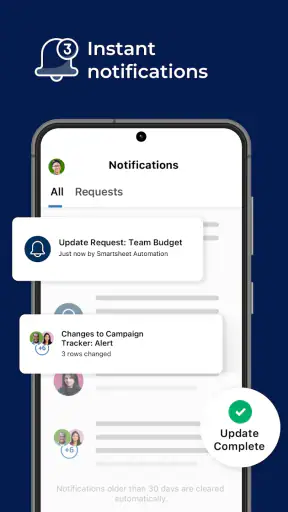
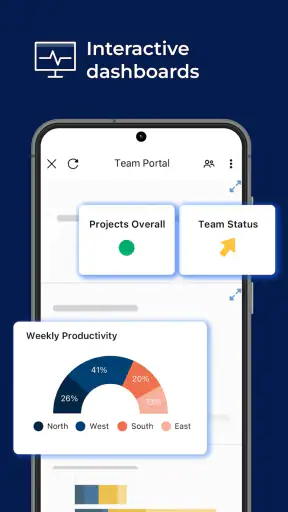
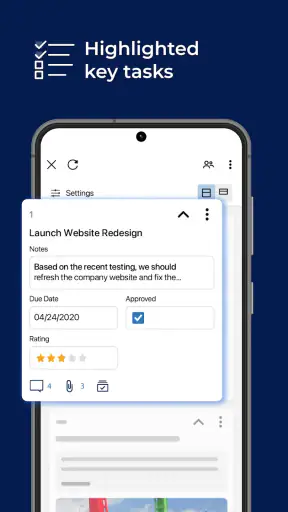
Work rarely becomes difficult because people lack ideas. It becomes difficult because the latest file is in one place, the decision is buried in a chat, the deadline lives in someone’s memory, and nobody is quite sure who owns the next step. I have used Smartsheet: Projects & Teams as a way to bring that scattered work into one visible workspace. Its main value is not that it makes every project simple; it makes responsibility, progress, and follow-up easier to see.
That distinction matters. This is a business app from Smartsheet Inc., aimed at teams that need more structure than a shared notes document but more flexibility than a rigid task list. It is free to install, rated for Everyone, and available on Android and iOS with a minimum operating system requirement of 11. The app has been around since September 10, 2013, and its current version is 26.15.0.27807, so it feels like a mature tool rather than a short-lived experiment.
Why Smartsheet is useful when work keeps slipping through the cracks
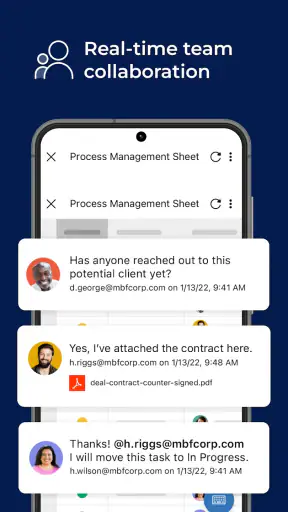
The recurring problem it addresses is coordination. A project can have a perfectly reasonable plan and still lose time when updates are delayed, ownership is unclear, or a small change affects several people. Smartsheet gives that work a shared structure, allowing a team to follow tasks, collaborate around projects, and keep important information closer to the work itself.
I would not describe it as a magic productivity button. It cannot make an uncommitted team communicate well. What it can do is reduce the number of places people need to check. When a manager wants a quick status update, a contributor needs to confirm the next action, or a group needs to review progress away from a desk, having a common project view is considerably more useful than relying on a chain of messages.
The app’s positioning around intelligent, AI-powered project management is most convincing when it supports decisions rather than replacing them. I still need to define a sensible workflow, choose meaningful task names, and agree with colleagues on what “done” means. The benefit comes afterward: once the structure is in place, the team spends less energy reconstructing what happened.
Its audience is broader than software development. I can see it fitting a marketing launch, a small operations process, an event plan, a content calendar, or a department that coordinates recurring work. It is especially appropriate when several people contribute to the same outcome but do not all work in the same place or at the same time.
Setting up a workspace that remains useful
The first mistake with a project-management app is trying to record everything. I get better results by starting with one active project and defining only the information the team will actually use. A task should answer a practical question: what needs doing, who is responsible, and what indicates that the work is ready to move on?
On a phone, I would begin with the project that currently causes the most follow-up messages. That immediately tests whether the app helps with a real problem instead of creating another administrative routine. I would then separate deliverables from conversations. A task such as “prepare campaign assets” is easier to manage than a vague entry like “marketing,” while a note about a decision should stay connected to the relevant work rather than being left in a separate chat.
A useful habit is to create a small number of clear work areas instead of one enormous catch-all project. This makes scanning easier on a smaller screen and helps a colleague understand where to look. If every request is treated as equally important, the workspace becomes a crowded inbox. I prefer using the app to expose priority and ownership, not merely to collect unfinished intentions.
The mobile experience is most valuable when it complements a team’s existing project process. I can review an update while travelling, check what is waiting on me, or record a change before I forget it. However, I would not want to perform every planning task on a phone. Detailed restructuring is usually more comfortable on a larger screen, while the mobile app is strongest for checking, updating, and responding at the moment work actually happens.
That leads to an important setup decision: decide what counts as a status change. If one person marks a task complete only when the final result is approved and another does so when the draft is sent, the shared view becomes misleading. Smartsheet can make a process visible, but the team still has to agree on the meaning behind each status.
Everyday scenarios where the app earns its place
Imagine a small team preparing a product announcement. One person handles copy, another prepares images, a third checks the schedule, and a manager approves the final material. Without a shared project view, the manager may ask for updates individually, while contributors wait for information that someone else already has. With Smartsheet, the team can use the project as a common reference: each person sees the work connected to the launch, and the manager can identify the next bottleneck without restarting the conversation.
Another practical situation is a weekly operations meeting. Instead of spending the opening part of the meeting reconstructing last week’s promises, I would use the app to review unfinished work and focus discussion on items that changed, stalled, or need a decision. The time saving does not come from typing faster; it comes from avoiding repeated status collection.
For a distributed team, the mobile app is helpful when work happens away from a computer. A site coordinator might need to update progress after checking a location, or a team lead might want to confirm the next assignment before a busy day begins. The value is modest for a single person, but it grows when several people depend on the same current information.
I also find it suitable for handoffs. When a task moves from planning to production, or from production to review, a visible project record can reduce the chance that context disappears between people. The best workflow is not to write a long diary. It is to leave the next person enough information to act without asking the same basic questions again.
There is a less obvious use for it in recurring work. A team can examine where tasks repeatedly wait and then adjust the process. If approvals are always late, the issue may not be individual performance; the handoff may be poorly defined. A project workspace cannot solve that automatically, but it can make the pattern easier to notice than a collection of private reminders.
What friction it removes, and what it does not
The strongest improvement is shared visibility. I spend less time wondering whether a request was received, which version is current, or who should respond next. That is particularly useful when a project includes people with different responsibilities. Everyone does not need to see every detail, but everyone benefits from a reliable view of the work that affects them.
Another advantage is the shift from memory to evidence. A verbal promise can disappear under pressure. A properly maintained project item gives the team something concrete to revisit. This does not mean every update needs a paragraph. Short, consistent updates are often more useful than elaborate notes that nobody reads.
The AI-oriented approach may also help users work with project information more intelligently, but I would treat it as an aid rather than an authority. Automated suggestions or summaries are only as dependable as the information the team has entered. If task names are vague, dates are stale, or ownership is missing, a polished result can still lead to a poor decision. My advice is to verify important conclusions against the underlying project details.
Compared with a basic notes app, Smartsheet offers a clearer project-management structure. Notes are quick for capturing thoughts, but they usually require more manual effort to show ownership, progress, and dependencies. Compared with a simple checklist app, Smartsheet is better suited to collaborative work with changing responsibilities. A checklist may be faster for personal errands, while this app becomes more worthwhile when several people need the same source of truth.
It also differs from a traditional spreadsheet, even though spreadsheet-style thinking may feel familiar to many users. A spreadsheet is excellent for calculations and ad hoc records, but it can become awkward when the real question is who is doing what and what needs attention next. Smartsheet is a better choice when the structure of the work matters as much as the values in individual cells.
On the other hand, a lightweight task manager may be preferable for a small personal routine. If I only need to remember three errands or maintain a private shopping list, a full project workspace adds unnecessary overhead. The app earns its keep when coordination is the problem, not when the problem is simply remembering.
Small workflow choices that make a noticeable difference
My first practical tip is to keep the mobile view focused on decisions. When reviewing a project, I look first for items that are blocked, waiting for someone else, or close to needing attention. This is more useful than reading every completed item. A project tool should help me decide what to do next, not invite me to admire a long history of activity.
Second, I would avoid using comments as a substitute for task ownership. A conversation can explain why something changed, but it should not force the next person to search through messages to discover the action required. Put the action in the task and use discussion to preserve the reasoning around it. That separation makes the project easier to scan later.
Third, I recommend a short review routine at the end of a workday or before a team meeting. Update only the items that genuinely changed, then check whether the next owner can proceed. This catches stale information without turning the app into a second full-time job. The discipline is simple, but it is where much of the practical value comes from.
A fourth insight is to use the app to identify process friction, not only individual delays. If the same stage repeatedly waits for approval, the answer may be a clearer approval rule or an earlier review point. Smartsheet gives the team a place to observe that pattern, while the improvement still has to come from the people running the process.
Finally, I would be careful with project detail on a phone. More fields do not automatically create more control. A compact, well-named workspace is easier to maintain than a complex one that nobody updates. If a field does not help someone make a decision, complete a handoff, or understand progress, it may be adding friction rather than removing it.
Who should use it, and who should choose something simpler
I would recommend Smartsheet to a team that regularly asks for status updates, coordinates work across roles, or needs a dependable project view while away from a desk. It is also a sensible option for people who have outgrown personal checklists but do not want their work scattered across email, chat, documents, and separate trackers.
I would be more cautious if your team dislikes structured processes or rarely updates shared information. In that environment, the app can become another neglected system. It is also not my first choice for a purely personal task list, a quick note-taking habit, or work that depends mainly on complex calculations rather than coordinated execution.
New users may wonder whether the free price makes it suitable for trying without much risk. Yes, it removes the cost barrier for getting started, but the more important question is whether your team will maintain a shared workflow. I would begin with a contained project, invite the people who genuinely contribute, and judge the experience by whether meetings become shorter and follow-ups become clearer.
Users may also ask whether the mobile app can replace desktop project planning. In my experience, it is better viewed as a companion for active work. It is convenient for checking progress, making updates, and responding to changes, while larger planning or cleanup sessions may be more comfortable elsewhere. That is not a weakness unique to this app; it is a sensible division between mobile access and detailed project administration.
The app’s adoption figures suggest that it has found a substantial audience: it has more than a million installs, an average rating of 4.8 from around twenty-nine thousand ratings, and roughly 1.2 thousand written reviews. Those figures do not guarantee that every team will enjoy the workflow, but they do indicate that the product is established enough to be taken seriously rather than treated as an untested experiment.
My final judgement
Smartsheet: Projects & Teams is most convincing when it removes repeated questions and gives a team one dependable place to understand current work. I like it less as a personal reminder tool and more as a shared operating surface for projects with several owners, handoffs, and changing priorities.
The friction is real: setup requires thought, consistent updates, and agreement about statuses and ownership. The mobile format also cannot make detailed planning as comfortable as working on a larger display. Teams that want a very simple checklist may find the structure excessive, while teams that need collaboration and visibility can benefit quickly once the first project is organized properly.
For me, the deciding test is straightforward: after using it for a real project, do people spend less time asking what is happening and more time doing the work? If the answer is yes, the free Business app from Smartsheet Inc. is worth keeping in the workflow. If your needs are limited to private reminders, a simpler alternative will probably feel faster. For coordinated projects, however, this is a practical and mature way to turn scattered updates into work the whole team can actually follow.


